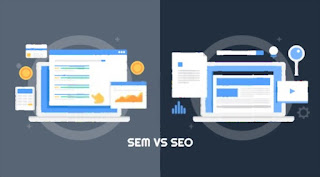
Difference between SEO and SEM. Both SEO and SEM are essential for your website to appear higher on search engines. In this article, Let’s get started.
Search Engine Marketing (SEM)
Difference between SEO and SEM
Search engine marketing is a method of promoting your business online to increase sales.
It’s a type of internet marketing where your business website is advertised on search engines.
It has two components: paid ads and search engine optimization.
1) Paid Search Advertising (PSA)
Paid search advertising works on a pay-per-click basis, which means you get paid every time someone clicks on your link.
This is a small fee you pay the search engine for each click.
There are several platforms where you can run paid search ads, such as Facebook, LinkedIn, Google Plus, and AdWords. This helps increase sales and make your brand more visible.
2) Search Engine Optimization (SEO)
Difference between SEO and SEM
SEO is used to improve your website’s ranking in search engine results.
SEO is essential for every website because it helps owners get free organic traffic and makes it easier for users to find content.
It helps websites or blogs rank higher in search engines by increasing the number of visitors and buyers for your products.
SEO is divided into two main categories: on-page SEO and off-page SEO.
Let’s take a look at each:
On-page SEO
On-page SEO includes all the methods used to optimize website loading speed, content and images, keyword density, and the HTML code of pages on your website.
- It involves working with specific data on the website.
- It helps improve user experience by driving more visitors and traffic to your blog or website.
On-page SEO includes:
SEO-friendly keywords
Using SEO-friendly keywords can help you rank higher in search engine results.
Ensure your URL is short so users can remember it easily.
Also, it should contain a relevant keyword related to your website.
Main keyword in title
Don’t forget to include keywords in your title tag so search engines can check it and display relevant results based on user searches.
The best title tag should be no more than 50-60 characters long.
H1 tag
Your website’s content pages should have an H1 tag.
It should be short, clear, and used only once.
The H1 tag is essential for every page on your website. It helps search engines find your web pages quickly.
Adding Multimedia
Adding multimedia to your website content helps users better understand information.
It engages customers and visitors through images, graphs, and videos. This way, you can encourage visitors to stay on your website longer and rank higher in search engine results, helping your website get more traffic and rank higher in search engine results.
Subtitles
Add a subtitle to your web page content using the main keyword.
Other Methods
Other methods include maintaining keyword density, improving loading speed, building internal and external links, and adding social media sharing buttons.
Off-Page SEO
In off-page SEO, you generate website traffic by building backlinks, listing your website on other websites, and sharing your blog on social networking sites.
- It helps improve your website’s ranking on search engine results pages (SERPs).
Activities like sharing content on social media, submitting articles and blogs, and submitting presentations are all part of off-page SEO.
Now you understand what SEM is, what SEO is, and the difference between SEO and SEM.
To better understand SEO, you can join a digital marketing course, which can open up many opportunities for you in the future.
This will also help you gain professional skills in SEO.
Good luck!